
2D dimensions, SI reports & 3D STEP assemblies
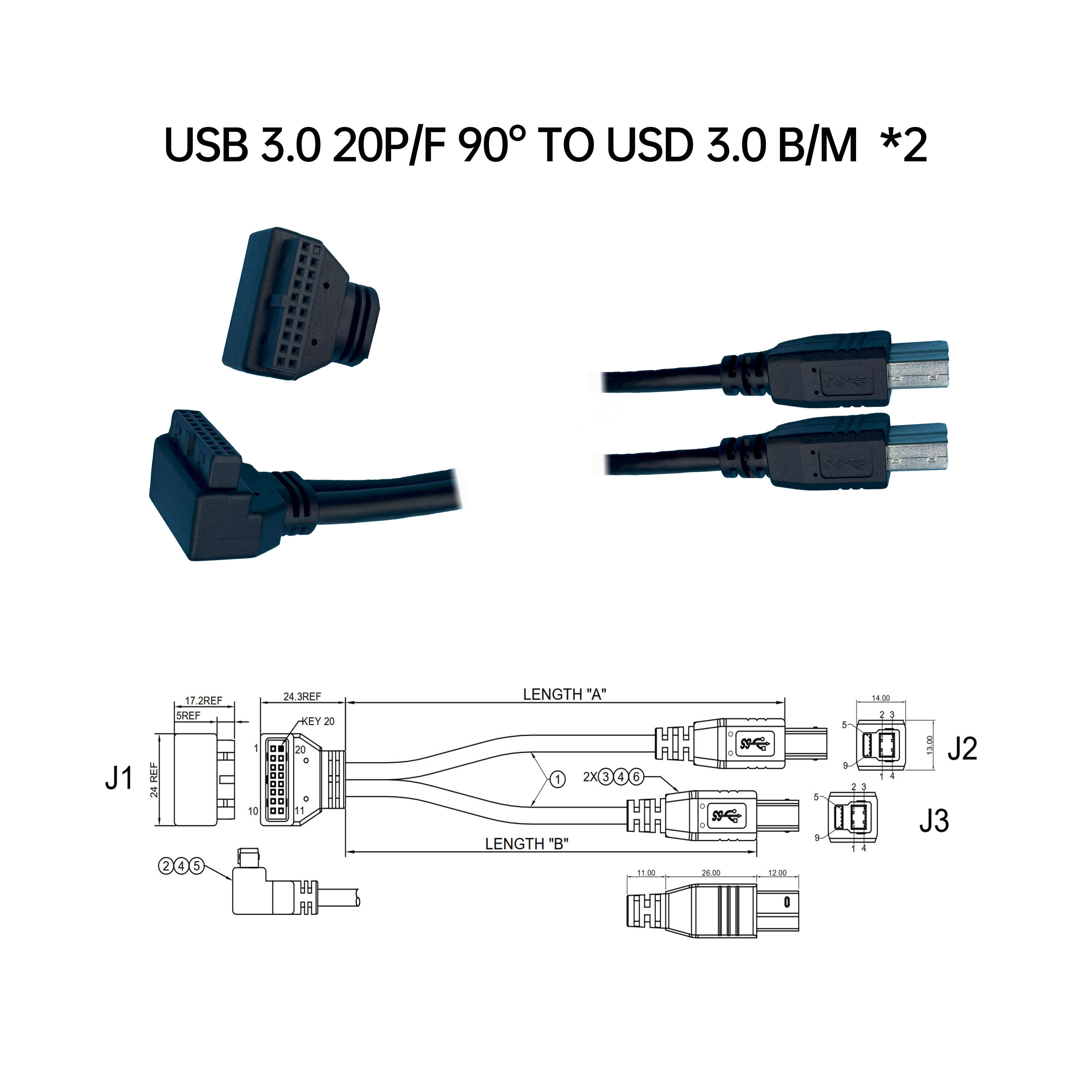
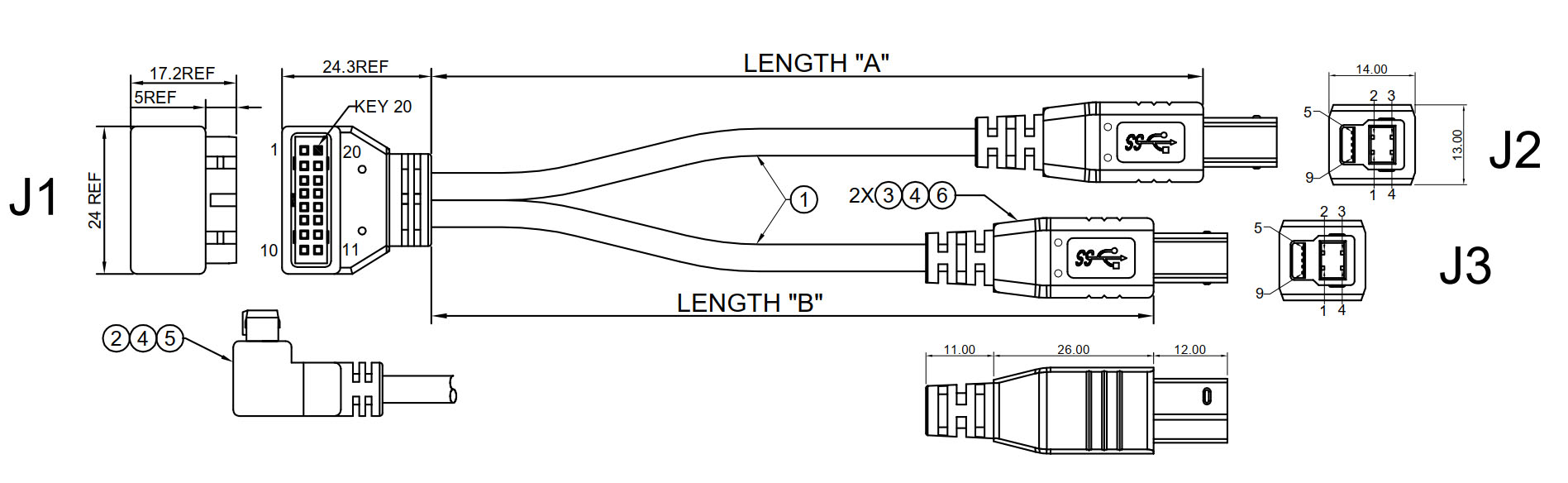
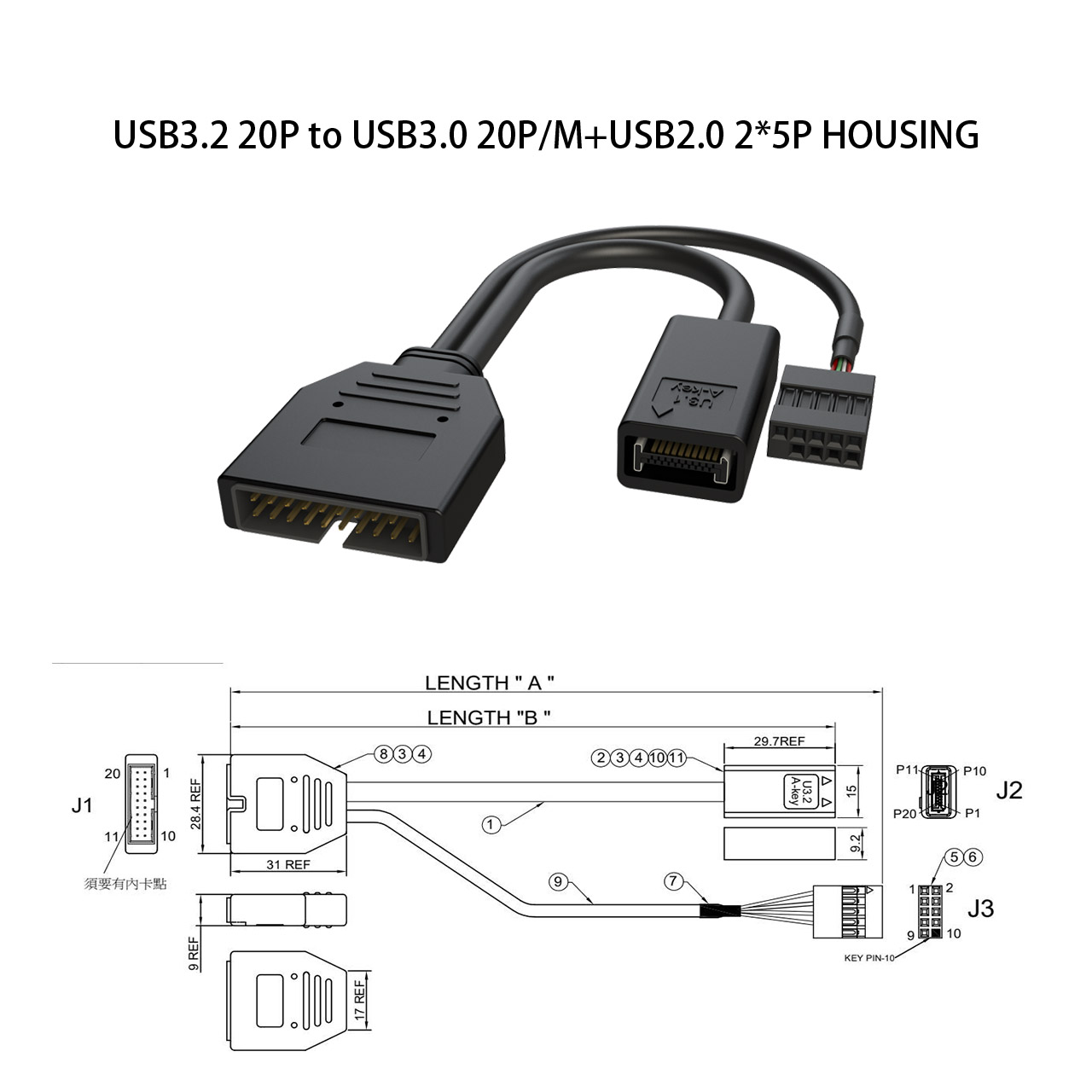
This USB 3.0 assembly uses a conventional 20-pin 90° female connector and two USB-B male branches. It is selected for a defined equipment layout and differs from dual-USB-A panel assemblies at both the external connector form and mating arrangement.
Provide photographs of both mating USB-B receptacles and explain their equipment functions. Check the exact USB-B form and wiring as well as the internal header keying. The 90° endpoint also needs an orientation and interference review near surrounding components.
Specify each branch length against its own destination to avoid a short branch or excessive spare cable. The branching structure is not permission to interconnect arbitrary hosts. Establish the signal direction and power relationship from the equipment definitions.
Suntecc evaluates drawing-based changes to length, cable exit, wiring and batch requirements. Include mating-interface details, a pin table, installation space and quantity in the RFQ. Define the configuration in an agreed drawing before proceeding with a custom requirement.
Evaluate a proposed assembly with the target equipment and planned length. Review mechanical fit, connection mapping and required functions together. Include any performance or environmental acceptance conditions in the request so the configuration can be assessed against the intended use.
Discuss this cable assembly · Browse this product category
| Part number | T1070C8202211 |
|---|---|
| Product family | USB 3.0 dual-branch assembly |
| Interface A | Conventional USB 3.0 20-pin 90° female |
| Interface B | Two USB-B male connectors |
| Construction | Right-angle internal endpoint with dual USB-B branches |
| Application | Dedicated wiring between matching 20-pin and USB-B interfaces |
We support custom cable lengths (5cm–200cm+), 90°/180°/270° connector orientations, silver-plated or Twinax conductors, and rapid sample prototyping.
Have specific signal integrity or mechanical integration questions? Chat directly with our engineers.
 203
 227
 245
 266
 262
 389
2D dimensions, SI reports & 3D STEP assemblies
This USB 3.0 assembly uses a conventional 20-pin 90° female connector and two USB-B male branches. It is selected for a defined equipment layout and differs from dual-USB-A panel assemblies at both the external connector form and mating arrangement.
Provide photographs of both mating USB-B receptacles and explain their equipment functions. Check the exact USB-B form and wiring as well as the internal header keying. The 90° endpoint also needs an orientation and interference review near surrounding components.
Specify each branch length against its own destination to avoid a short branch or excessive spare cable. The branching structure is not permission to interconnect arbitrary hosts. Establish the signal direction and power relationship from the equipment definitions.
Suntecc evaluates drawing-based changes to length, cable exit, wiring and batch requirements. Include mating-interface details, a pin table, installation space and quantity in the RFQ. Define the configuration in an agreed drawing before proceeding with a custom requirement.
Evaluate a proposed assembly with the target equipment and planned length. Review mechanical fit, connection mapping and required functions together. Include any performance or environmental acceptance conditions in the request so the configuration can be assessed against the intended use.
Discuss this cable assembly · Browse this product category
| Part number | T1070C8202211 |
|---|---|
| Product family | USB 3.0 dual-branch assembly |
| Interface A | Conventional USB 3.0 20-pin 90° female |
| Interface B | Two USB-B male connectors |
| Construction | Right-angle internal endpoint with dual USB-B branches |
| Application | Dedicated wiring between matching 20-pin and USB-B interfaces |
We support custom cable lengths (5cm–200cm+), 90°/180°/270° connector orientations, silver-plated or Twinax conductors, and rapid sample prototyping.
Have specific signal integrity or mechanical integration questions? Chat directly with our engineers.
203227245266262389